
Every time a family prepares for a trip, a familiar chaos sets in. Passports are missing, phone chargers are buried in random tote bags, and someone is inevitably repacking a suitcase on the living room floor twenty minutes before departure.
The issue isn't a lack of effort—it's a lack of systems.
In high-performing corporate environments, operations teams never reinvent core processes from scratch for every new project. They rely on master templates to guarantee consistent execution, reduce errors, and protect cognitive load.
Travel logistics demand the exact same rigor. By standardizing your travel gear and creating a master packing template, you remove the emotional strain from packing and turn departure day into a repeatable, stress-free routine.
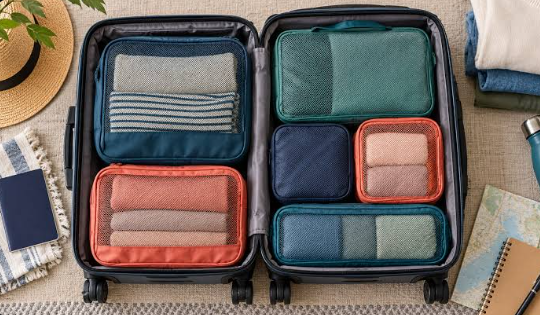
Standardized gear modules turn chaotic packing into a clean system. Source: Digital Nomad World
The Hidden Cost of "Reinventing the Bag"
When you pack based on memory or start from scratch every trip, you suffer from decision fatigue. Deciding which cable goes where or estimating how many extra shirts your kids might need consumes valuable mental energy long before you arrive at the airport.
Standardizing your travel gear solves three critical problems:
Reduces Prep Time by 70%: Instead of debating what to pack, you simply execute a pre-verified list.
Eliminates Forgotten Essentials: Essential items stay grouped in dedicated modules, preventing last-minute scrambles for wall blocks or medication.
Ensures Rapid Unpacking & Departure: Knowing exact bag positions makes transit checks instantaneous.
The 3 Pillars of a Master Gear Template
A robust packing template isn't just a list of clothes—it's an operational blueprint structured into three core tiers:
1. Fixed Core Modules (The Non-Negotiables)
Keep dedicated, duplicate kits pre-packed year-round so you never pull from your home drawers:
Tech Kit: Dedicated charging cables, international adapters, and a compact portable battery bank that never leave the travel pouch.
Toiletry Pod: TSA-compliant, leak-proof containers pre-filled with daily essentials, ready to grab.
First-Aid & Transit Essentials: Medications, sanitizers, and basic wellness items stored in a clear, accessible case.
2. Variable Loadouts (The Trip Matrix)
Your master template should adjust dynamically based on three variables:
Duration: 3-day weekend vs. 7-day extended trip.
Climate: Warm-weather minimalism vs. cold-weather layering.
Destination Mechanics: Urban hotel vs. outdoor resort.
3. Dedicated Bag Zones
Assign every family member or gear category a specific visual module (using color-coded compression cubes). When every item has a fixed home inside the bag, auditing your luggage takes under 30 seconds.
4 Steps to Build Your Family's Master Packing System
To see how standardizing packing cubes and modular organization works in practice, these video walkthroughs demonstrate efficient layout and compression techniques:
Packing Cubes are NOT What You Think They’re For
YouTube · Aly Smalls
YouTube · Sophie Liard
Audit Your Last 3 Trips: Identify the items you packed but never used, as well as the essentials you forgot. Strip out the excess.
Group Items into Functional Categories: Categorize gear by function (Tech, Documents, Wardrobe, Comfort) rather than by owner.
Establish a Single Source of Truth: Store your master template digitally where it can be referenced across devices before every departure.
Run a Pre-Departure Kickoff: Treat the day before travel like a project milestone. Review your checklist, verify bag contents, and lock the bags.
Stop Overthinking Departure Day
Travel should be about the destination, not the headache of getting out the front door. By building a standardized gear template, you reclaim your mental clarity and start every getaway with complete confidence.
Ready to stop starting from scratch?
Download our Free Tactical Packing Blueprints at WonderTrustCo.com to grab pre-built master templates designed specifically for busy families.